4.6.09

1 of every 6 dollars of Americans' income is government check or voucher...


Benefit spending soars to new high
1h 12m ago By Jay LaPrete for USA TODAY

A customer paying with a "food stamp" card at a Kroger store in Columbus, Ohio. Enrollment for food stamps hit a record 33.2 million people in March, up 5.2 million from last year.

By Dennis Cauchon, USA TODAY

The recession is driving the safety net of government benefits to a historic high, as one of every six dollars of Americans' income is now coming in the form of a federal or state check or voucher.

Benefits, such as Social Security, food stamps, unemployment insurance and health care, accounted for 16.2% of personal income in the first quarter of 2009, the Bureau of Economic Analysis reports. That's the highest percentage since the government began compiling records in 1929.

In all, government spending on benefits will top $2 trillion in 2009 — an average of $17,000 provided to each U.S. household, federal data show. Benefits rose at a 19% annual rate in the first quarter compared to the last three months of 2008.

The recession caused about half of the increase, according to the report. Unemployment insurance nearly tripled in the past year. The other half is the result of policies enacted during President George W. Bush's first term.

Following the 2001 recession — when costs normally decline — social spending soared to pay for the Medicare drug benefit, expanded health care for children and greater use of food stamps.

The safety net is working, advocates say.

"We're not seeing the hunger we saw in the 1930s because the food stamp program is doing what it's supposed to do," says Florida food stamp director Jennifer Lange.

What's driving the $209 billion increase in benefit costs from a year ago:

•Unemployment insurance. One-fourth of the extra spending covers jobless benefits, a program started in the Depression. The stimulus law, passed in February, increased benefits.

• Social Security. The bad economy has prompted a 10%-15% jump in early retirements, the program's actuary says. A 5.8% increase took effect January 1. Bottom line: $55 billion in new costs.

• Food stamps. Enrollment hit a record 33.2 million people in March, up 5.2 million from last year. The stimulus law boosted the size of the benefit. Average March benefit: $114 per person.

"The increase in social spending is still relatively modest given the severity of the downturn," says economist Dean Baker of the liberal Center for Economic and Policy Research. "We're not France."

Adam Lerrick, economist at the conservative American Enterprise Institute, says the benefits' explosion will eventually lead to an economic crisis.

"We've seen this movie before in many countries. It always has the same ending," he says.

2.6.09

GM unloads Hummer to Chinese buyer

GM unloads Hummer to Chinese buyer

Bankrupt automaker discloses details of plan to sell truck line to China's industrial company Sichuan Tengzhong.

By Aaron Smith, CNNMoney.com staff writer

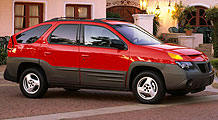
2009_hummer_h3.03.jpg
Hummer is one of the brands GM is shedding as it restructures.
GM's junk heap
Over its history General Motors has made its share of bad products. Some were poorly built, some were badly executed, others suffered from lousy timing.

NEW YORK (CNNMoney.com) -- General Motors Corp. has struck a deal to sell its Hummer truck unit to a Chinese industrial business, the two companies confirmed Tuesday.

Privately owned Sichuan Tengzhong Heavy Industrial Machinery Company Ltd., based in China, will acquire the truck brand, which has been part of GM since 1999. Tengzhong said it plans to keep Hummer's management team.

"We plan to ... allow Humer to innovate and grow in exciting new ways under the leadership and continuity of its current management team," said Yang Yi, chief executive of Tengzhong.

Yang said the deal "will allow Hummer to better meet demand for new products such as more fuel-efficient vehicles in the U.S."

The companies said the deal would likely close by the end of September.

As part of the deal, some GM plants will continue to build the Hummer brand for the new owner, at least for awhile. The company said its Shreveport, La., plant will keep building Hummers for the new owner until at least 2010.

The news comes a day after GM (GMGMQ) filed for bankruptcy protection in New York.

"I'm confident that Hummer will thrive globally under its new ownership," said Troy Clarke, president of GM North America, in a press release. "And for GM, this sale continues to accelerate the reinvention of GM into a leaner, more focused, and more cost-competitive automaker."

GM also said that the deal should protect more than 3,000 jobs in manufacturing and engineering, and at dealerships "around the country."

The sale of the Hummer brand to a Chinese company will not impact the production of U.S. military vehicles. Military Humvees are produced by a different company, privately held AM General, based in South Bend, Ind.

The Hummer and other large vehicles have been a drag on the U.S. auto industry since fuel prices spiked in 2008 and the recession deepened.

GM said it sold 5,013 Hummers worldwide in the first quarter, down 62% from the 13,050 that it sold in the same period the prior year.

Hummer isn't the only brand that GM is leaving behind. The automaker will also shed its Pontiac, Saturn and Saab brands and cut loose more than 2,000 of its 6,000 U.S. dealerships by next year.

That could result in more than 100,000 additional job losses if those dealerships are forced to close.

GM filed for bankruptcy hours after Chrysler's bankruptcy process cleared a hurdle when a federal judge approved its asset sale.

The GM bankruptcy was hailed by President Obama, who wants a complete overhaul of the U.S. auto industry, even though the Chapter 11 filing is expected to result in the loss of 20,000 jobs and the closure of a dozen facilities.

Citigroup (C, Fortune 500) was financial adviser in GM's Hummer deal.

--CNNMoney.com senior writer Peter Valdes-Dapena contributed to this report. To top of page

29.5.09

Dilemma for the Fed as property recovery falters

Dilemma for the Fed as property recovery falters

By Krishna Guha and Sarah O’Connor in Washington

Published: May 28 2009 19:02 Last updated: May 29 2009 00:32

A record 9.1 per cent of all US mortgages were delinquent at the end of the first quarter, the Mortgage Bankers’ Association reported on Thursday, highlighting the pressure on policymakers as they attempt to engineer a still elusive bottom in the US property market.

Housing starts and sales appear to be stabilising, and homes no longer look expensive. But house prices are still falling rapidly – down 2.2 per cent in March alone, according to the Case-Shiller index.

Delinquencies and foreclosures are rising and spreading to so-called prime mortgages.

Now a partial rebound in mortgage rates – in conjunction with the growth of negative equity – threatens to maintain downward pressure on prices, while also limiting the capacity of indebted households to refinance at ultra-low rates.

“The housing recovery hasn’t even started, and it is already at risk,” said Ed Yardeni, president of Yardeni Associates.

Bank examiners say house prices and unemployment are critical for determining bank credit losses.

While the Federal Reserve and US Treasury have never set out to target house prices, they have attempted to mitigate the risk that house prices undershoot their fundamental value.

The Fed has sought to compress risk spreads on mortgages by buying up to $1,450bn (€1,040bn, £906bn) in securities issued by Fannie Mae and Freddie Mac, the home loan giants. Its strategy pushed mortgage rates down to levels not seen for decades.

But yields on Fannie and Freddie paper have moved higher in recent days as yields on government securities jumped. Mortgage rates – already back above 5 per cent – may climb higher.

Fed officials do not appear alarmed by the rise in mortgage rates thus far, which still leaves them low by historic standards, with ample room for borrowers to refinance. However, some analysts worry the financial market is moving too fast for the housing market. While cheap mortgages prompted a wave of refinancing applications, the downsizing of the mortgage industry since 2006 means the system cannot process large numbers of borrowers quickly. The danger is that mortgage rates rise before a large chunk of total household debt can be refinanced at very low rates.

Some economists say the Treasury should reconsider directly providing low-cost loans for new borrowers – an idea debated by George W. Bush’s administration.

Negative equity threatens to compound house price declines. Celia Chen, director of housing at Moody’s Economy.com, says one in five US homeowners has negative equity, and about one in 10 has a loan to value ratio of 130 per cent or higher.

US officials are considering whether Fannie and Freddie should be allowed to refinance mortgages worth more than 105 per cent of the underlying house.

Some administration officials are wondering whether they also need a policy that directly tackles the risk that households deeply “underwater” on their loans will start to walk away, fuelling further price declines.

Barack Obama’s administration has focused on making monthly payments affordable – and avoided subsidising politically controversial debt forgiveness.

A push towards debt renegotiation by giving bankruptcy judges the power to force writedowns failed in the Senate.

Some officials think they may have to revisit the negative equity problem and look at ways to revamp initiatives such as Hope for Homeowners, which set out to support loan writedowns but never gained scale, in part because of a lack of subsidies.

However, some analysts are sceptical. “You have so many properties so far underwater that foreclosure or at least a short sale ... is probably the only way out of the problem,” said Adam York, economist at Wachovia. “You’ve got to clean out the negative equity.”

Copyright The Financial Times Limited 2009

Indians refuse Air France compensation, demand more


Indians refuse Air France compensation, demand more

29 May 2009, 1935 hrs IST, PTI

MUMBAI: A group of 53 Indian passengers, who were allegedly subjected to racial profiling by Air France at Paris Airport on May 10, have threatened to move court if the airlines did not provide compensation in accordance with law.
Air France has offered €350 per passenger to settle the matter. But the aggrieved passengers have said they cannot accept anything less than €650 as compensation. "Air France has offered us €350 to settle the matter. This is a violation of the European Union law on such matters," Sachin Gupta, an aggrieved passenger, told PTI here. As many as 53 Indian passengers have accused the airlines of subjecting them to 'racial profiling', during their journey to Mumbai from US via Paris on an Air France flight on May 10.
The airline, while denying the charges, had regretted "any and all inconvenience caused to the passengers due to this incident" and offered a non-refundable voucher of Rs 23,500 or €350 per passenger as full and final settlement of the matter. "We have refused the offer and have written to the airline to duly compensate us, failing which we will be left with no option but to take to legal action," Gupta. According to him, the airline is liable to pay, by law, a cash compensation of €650 to all passengers who were subjected to "ill-treatment and denied certain rights by Air France authorities."

Blog Archive

Search This Blog