19.3.09

The List: The World’s Biggest Bailouts (before The Bailout)

The List: The World’s Biggest Bailouts
 
Posted September 2008 

Lehman Brothers is no more. But before letting it fail, the United States rescued Bear Stearns and saved Fannie and Freddie. So what are the biggest bailouts of all time? In this List, FP looks at five of the biggest—and whether they were worth the cost.


LUKE FRAZZA/AFP/Getty Images

The U.S. Savings and Loan Crisis

Bailout date: August 1989

Amount: Estimates vary widely, but $200 billion (in 2008 dollars) is a reasonable figure.

What happened: The “S&L” debacle of the late ’80s and early ’90s was long in the making and long in the unwinding. U.S. taxpayers were first put on the hook when then President George H.W. Bush (right) signed the Financial Institutions Reform, Recovery and Enforcement Act of 1989, which radically reformed the savings and loan industry and federal regulations. When the dust finally settled in 1995, more than 1,000 small lending institutions known as “savings and loans,” also called “thrifts,” had failed. Half of the federally insured thrift institutions in the United States had gone under in less than a decade, and the associated slowdown in new home construction and the financial fallout contributed to the 1990-1991 recession. The underlying causes of the S&L crisis are complex and disputed, but most scholars generally agree that high, volatile interest rates, reckless lending practices, rapid deregulation, and lax oversight paved the way for the greatest banking disaster since the Great Depression.


PAUL VICENTE/AFP/Getty Images

South Korea

Bailout date: December 1997

Amount: $78 billion (in 2008 dollars)

What happened: Two words: Asian crisis. Beset by a collapsing currency and bankruptcies galore, South Korea turned to the International Monetary Fund (IMF) for help, and the World Bank, the United States, Japan, and 11 other countries pitched in funds as well. In exchange, the Korean government had to stomach tough conditions, including higher interest rates and reforms intended to open the country’s closed economy and crack down on cozy relationships between banks and large, opaque conglomerates called chaebols. The economic crisis brought to power opposition leader Kim Dae Jung (left), a reformer credited by many for pulling South Korea back from the brink of disaster. Today, South Korea’s economy faces challenges of a different sort—principally rising inflation and an aging population—though The Economist forecasts 4.2 percent growth for 2009.


AGUS LOLONG/AFP/Getty Images

Indonesia

Bailout date: January 1998 – April 1999

Cost: between $58 billion and $64.7 billion (in 2008 dollars)

What happened: Rocked by the Asian financial crisis of the late 1990s, Indonesia was home to one of the IMF’s biggest bailouts. The country’s rupiah currency had been dropping steadily since August 1997, with inflation soaring to nearly 80 percent. On top of the ensuing capital flight, protests and political turmoil paralyzed the capital of Jakarta under President Suharto (shown at right with then IMF Managing Director Michel Camdessus), in power since 1968. At first, the IMF money was contingent on Suharto’s ending his penchant for cronyism, but that stipulation was dropped shortly after the president defiantly named family members and associates to his government. After the bailout, Indonesia’s economic woes continued for several years and resentment grew toward the IMF policies of the 1990s, which some felt compromised the country’s economic sovereignty. Macroeconomic conditions eventually improved, aided by the resolution of the East Timor crisis. Ironically, the 2004 tsunami also helped, bringing the country close to settling a dispute in the separatist Aceh region. In 2006 and 2007, the U.S. CIA called the country’s stock market one of the three best performers in the world.


EVARISTO SA/AFP/Getty Images

Brazil

Bailout dates: November 1998, August 2001, and August 2002

Cost: $56.7 billion, $16.3 billion, and $36.7 billion (respectively, in 2008 dollars)

What happened: Brazil’s first bailout in 1998 came on the heels of financial crises in Asia and Russia that had prompted panic among investors in Latin America. This time, the IMF and a host of other lenders vowed to head off the crisis before it struck. Brazil, South America’s largest economy, was offered a healthy package of aid to stabilize the region. In return, Brazil was asked to cut spending and raise taxes to prevent a budget shortfall. Brazil’s legislature rejected the conditions, but the loans went forward anyway. Lenders intervened again in the name of stability in 2001, as Brazil’s currency, the real, had devalued 20 percent between January and August and public debt was growing. Elections in 2002 raised yet more concerns as investors were unsure how leftist candidate Luiz Inácio Lula da Silva (above) would handle the crisis. Brazil’s stock market fell further when then U.S. Treasury Secretary Paul O’Neill demanded proof that another loan would not “go out of the country to Swiss bank accounts.” Furious, Brazil demanded an apology, and soon thereafter, the United States and the IMF offered the country a $30 billion package.


FABIAN GREDILLAS/AFP/Getty Images

Argentina

Bailout dates: December 2000 and August 2001

Cost: $50.7 billion and $1.5 billion (respectively, in 2008 dollars)

What happened: Just two years after a dramatic recession that left unemployment at about 16 percent, Argentina’s bailout came at a moment of severe crisis. A projected $6.5 billion budget shortfall in 2001 coincided with another $15 billion due to creditors that year. With Argentine markets tumbling, the government rushed to secure assistance from the IMF, the World Bank, and other lenders. Loans were extended again in 2001, and this time, lenders asked Argentina to slash pensions and government spending while raising taxes. The austere strategy provoked tens of thousands of angry protesters to hit the streets repeatedly. Despite the loans, the economic crisis was far from averted and the country defaulted on $81 billion in bonds in December 2001. Banks and the Argentine peso collapsed, and many middle-class Argentines fled abroad, their savings wiped out. In 2003, the IMF and Argentina agreed that the heavily indebted country would be asked to repay only the interest on its debt, and in March 2005, bondholders swallowed a restructuring of the defaulted debt. Argentina paid off a final $9.5 billion owed to the IMF in 2006, and on Sept. 2, President Cristina Fernández de Kirchner promised to repay another $6.7 billion to the Paris Club of international creditors.

Note: One should be careful comparing bailouts of financial systems or national economies with those of individual firms such as Fannie Mae and Freddie Mac. Additionally, one could also list such bailouts relative to the size of the economy in question, in which case smaller countries such as the Dominican Republic would rank much higher.


xenophobic populism FOX NEWS


As Economy Slumps, Firms Line Up to Hire Skilled Foreign Workers

IT communications workers complain that H-1B visa workers take jobs away from Americans, but companies say recruiting foreign talent is necessary to remaining competitive in a global economy.

FOXNews.com

Thursday, March 19, 2009

WASHINGTON -- At a time when high-tech corporations like Microsoft, Cisco and IBM are laying off American workers by the thousands, some of those very same companies will begin applying for the right to hire foreign workers on April 1.

The Washington Alliance of Technology Workers -- the IT arm of the Communications Workers of America -- has expressed outrage that the Homeland Security Department is once again expected to issue 65,000 visas, known as H-1Bs, that allow American firms to hire foreign workers each year.

"In this brutal economic climate, American workers should get first dibs at the jobs out there," says WashTech spokeswoman Priyanka Joshi. "No more workers on H-1B visas should be invited into the country until Americans have had the opportunity to fill those jobs."

But companies have traditionally argued that recruiting foreign talent is necessary to remaining competitive in a global economy.

"It's not just a zero-sum game in terms of employment," said longtime immigration attorney Daryl Buffenstein. "When companies start new projects, sometimes they need to bring in someone with a particular skill set, and what people often forget is that many of the people here on H-1B visas become engines of economic growth."

With the number of visas available capped at 65,000 each year, the demand for H-1B visas over the past two years has exceeded supply. Analysts expect this year to be no exception despite a global recession, which tends to reduce migration.

"My impression is that the number of petitions is certainly down from last year," Buffenstein said. "But I don't think that it will be as low as some people are predicting."

Microsoft Corporation led U.S. companies receiving H-1B visas last year with a total of 1,037. Microsoft's announcement in January that the company would shed up to 3,000 jobs over the next 18 months does not seem to be putting a damper on its  search for foreign talent.

In an e-mail, Microsoft said it will continue to seek the most highly skilled technical expertise in the U.S. and abroad. A company spokesman said the option to hire foreign workers is necessary to protecting and increasing Microsoft's ability to continue providing U.S. workers with jobs.

The argument for recruiting talent abroad -- that the foreign worker possesses skill that uniquely qualify them to fill necessary jobs -- may not pass muster as American unemployment figures continue to skyrocket. U.S. employers are eliminating jobs at an alarming rate -- 651,000 positions last month alone. The Labor Department said Thursday that requests for unemployment dropped to 646,000.

Conversely, the U.S. financial sector, for years a major player in the visa process, may have to scale back its foreign worker pool. Under President Obama's $787 billion stimulus bill, financial institutions that received TARP money must give hiring priority to U.S. workers.

"The TARP provisions will have a chill effect on the ability of companies to bring in key personnel," Buffenstein said. "The problem with the whole TARP debate is that it misses the fact that many of those businesses have just a tiny proportion of their workforce here on H-1B visas, in some cases less than 1 percent of their whole workforce. Ninety-nine percent of their employees are U.S. workers. So it's unfortunate that a company would be prohibited from bringing in key personnel."

Already, Bank of America has begun rescinding job offers made to MBA students graduating from U.S. business schools this year. Bank of America was granted just 32 H-1B visas last year. The bank is now projecting some 35,000 lay offs over the next three years.

"Here at Dartmouth we are partially subsidizing -- through private and federal money -- the education of some of the brightest students from around the world," said Dartmouth economics professor Bruce Sacerdote. "It's a slam dunk that we should want to keep those people here in the U.S. once they are educated."

Many economists now wonder if the new restrictions will damage New York's financial sector -- an area that employs thousands of H-1B recipients.

"Restrictions on H-1B visas is simply poor economic policy," said Harvard economist Greg Mankiw, "reflecting xenophobic populism rather than hard-headed analysis."

17.3.09

Recession? What Recession?

Highest paid athletes in the world

1. Tiger Woods: $100 million
2. Oscar De La Hoya: $43 million
3. Phil Mickelson: $42.2 million
4. Kimi Raikkonen: $40 million
5. Michael Schumacher: $36 million
6. David Beckham: $33 million
7. Kobe Bryant: $32.9 million
8. Shaquille O'Neal: $31.9 million
9. Michael Jordan: $31 million
10. Ronaldinho: $31 million
11. Valentino Rossi: $30 million
12. Alex Rodriguez: $29.2 million
13. Roger Federer: $29 million
14. Derek Jeter: $28.3 million
15. LeBron James: $27.3 million
16. Floyd Mayweather: $26.5 million
17. Yao Ming: $26.3 million
18. Vijay Singh: $25.8 million
19. Leonard Davis: $25.4 million
20. Arnold Palmer: $25.0 million
21. Jeff Gordon: $24.5 million
22. Kevin Garnett: $24.3 million
23. Reggie Bush: $23.8 million
24. Allen Iverson: $23.3 million
25. Maria Sharapova: $23 million

Figures include endorsements and bonuses
For the period ending October 2007
Source: Forbes magazine

Commentary: Obama a leader who actually leads

By Jack Cafferty
CNN
Decrease font
Enlarge font

Editor's note: Jack Cafferty is the author of a new book, "Now or Never: Getting Down to the Business of Saving Our American Dream," to be published in March. He provides commentary on CNN's "The Situation Room" daily from 4 to 7 p.m. ET. You can also visit Jack's Cafferty File blog.

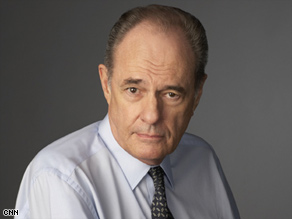
Jack Cafferty says Obama is getting things done even though he's made some mistakes.

Jack Cafferty says Obama is getting things done even though he's made some mistakes.

NEW YORK (CNN) -- What a welcome change to feel like someone is running the country instead of running it into the ground.

President Obama has done more in eight weeks than George W. Bush did in eight years -- unless you include starting a couple of wars.

While the armchair quarterbacks second guess the new president, he gets up every day and does things, lots of things.

Whether it's creating commissions for women and girls, ordering the investigation of President Bush's use of signing statements, or jamming a huge stimulus package through Congress, the man is working his tail off. And he seems to be loving every minute of it. It's almost as though our president was born to do exactly what he's doing. He's leading, and boy, is that refreshing.

I remember many times when Bush was in office wondering who the hell was running the country. Then he would appear somewhere in front of a handpicked audience to utter some banalities or say something utterly stupid and I would be reminded. I don't miss him.

That's not to say President Obama hasn't stubbed his toe here and there. Signing that omnibus spending bill with all those earmarks in it after campaigning so hard against pork was probably a mistake. The opportunity was right there to send that bill back to Congress with a note that read, "I told you I am against earmarks and I meant it. Now do it over and send me something clean." Nancy Pelosi's head would have probably exploded, but the American people would have been ready to crown him king.

There are serious questions about whether Tim Geithner has what it takes to solve the banking crisis. Either nationalize the big ones in trouble or let them fail. It doesn't seem that just continuing to hand them money is working.

Better background checks on some of his appointees would have saved him some embarrassment. There's no excuse for asking someone like Tom Daschle with his problems to do anything.

But the point, I guess, is this: President Obama is attacking our country's problems on several fronts. He's got ambitious ideas on how to solve them, and he communicates a sense of calm and confidence to the rest of us as he goes about his business. Will all his ideas work? Of course not. But if you throw enough stuff at the wall, some of it will stick.

And at least I don't go to bed at night worried that I'll wake up in the morning to find out we're about to invade someone.

The opinions expressed in this commentary are solely those of Jack Cafferty. 

13.3.09

State by State Infrastructure Stimulus

State

Infrastructure Stimulus($)


 Calif.   

3,917,656,769


 Texas   

2,803,249,599


 N.Y.    

2,774,508,711


 Fla.

1,794,913,566


 Ill.

1,579,965,373


 Pa.

1,525,011,979


 N.J.      

1,335,784,100


 Ohio     

1,335,600,553


 Mich. 

1,150,282,308


 Ga. 

1,141,255,941


 N.C.    

909,397,136


 Va.      

890,584,959


 Mass.      

890,333,825


 Ind.

836,483,568


 Mo.     

830,647,063


 Wash.   

739,283,923


 Wisc.  

716,457,120


 Md.            

704,863,248


 Tenn.

701,516,776


 Minn.  

668,242,481


 Ariz.  

648,928,995


 Ala. 

603,871,807


 S.C.   

544,291,398


 Colo.

538,669,174


 La.  

538,575,876


 Okla.

535,407,908


 Ky.

521,153,404


 Conn. 

487,480,166


 Ore.

453,788,475


 Iowa  

447,563,924


 Miss.    

415,257,720


 Kansas 

413,837,382


 Ark.     

405,531,459


 N.M.    

299,589,086


 Utah    

292,231,904


 W. Va. 

290,479,108


 Neb.     

278,897,762


 Nev.    

270,010,945


 D.C.

267,617,455


 Mont.      

246,599,815


 Alaska 

240,495,117


 U.S. Territories  

238,045,760


 Idaho 

219,528,313


 S.D. 

213,511,174


 N.D.  

200,318,301


 Hawaii 

199,866,172


 R.I.  

192,902,023


 Wyo.

186,111,170


 N.H.      

181,678,856


 Maine     

174,285,111


 Del.

158,666,838


 Vt.    

150,666,577


 Total   

38,101,898,173


 SOURCE: AP, www.cbsnews.com

China 'worried' about US Treasury holdings

China 'worried' about US Treasury holdings

BEIJING – China's premier didn't say it in so many words, but the implied warning to Washington was blunt: Don't devalue the dollar through reckless spending.

Premier Wen Jiabao's message is unlikely to be misunderstood at the White House. It is counting on Beijing to help pay for its stimulus package by buying U.S. bonds. China already is Washington's biggest foreign creditor, with an estimated $1 trillion in U.S. government debt. A weaker dollar would erode the value of those assets.

"Of course we are concerned about the safety of our assets. To be honest, I'm a little bit worried," Wen said at a news conference Friday after the closing of China's annual legislative session. "I would like to call on the United States to honor its words, stay a credible nation and ensure the safety of Chinese assets."

The appeal suggested the outlines of Chinese President Hu Jintao's stance when he meets with President Barack Obama at an April 2 summit in London of the Group of 20 major economies on possible remedies for the global crisis.

Wen gave no indication whether Beijing wants changes in U.S. policy. But economists said his comments reflect fears that higher U.S. budget deficits from Washington's $787 billion stimulus package could drive down the dollar and the value of China's Treasury notes.

"China is telling the U.S. to be careful, not to overspend and keep an eye on the dollar," said Kelvin Lau, regional economist at Standard Chartered in Hong Kong. "There are risks that China cannot control, so they're depending on the U.S. to maintain fiscal prudence and keep the dollar reasonably stable."

Analysts estimate China keeps nearly half of its $2 trillion in foreign currency reserves in U.S. Treasuries and notes issued by other government-affiliated agencies.

"Inside China there has been a lot of debate about whether they should continue to buy Treasuries," said Frank Gong, chief China economist for JP Morgan.

Beijing is trying to increase its leverage at the London G-20 meeting by reminding its partners of its role in financing U.S. spending, Gong said.

"Without China's buying (Treasuries) and continuing to fund U.S. deficit spending, interest rates could have been much higher. That could be very destabilizing in this very recessionary environment," he said. "By attracting a lot of attention to this issue, China is already increasing its influence ahead of the G-20 meeting."

Finance officials from the G-20 meet this weekend. U.S. Treasury Secretary Timothy Geithner is pressing for a new coordinated global stimulus. Japan is supportive but European governments are reluctant to make expensive commitments before they see how current plans are working.

Wen also offered an unqualified defense Friday of his government's policies in Tibet, ignoring questions about a massive security buildup in the Himalayan region.

Tensions have spiked ahead of two key anniversaries this week — the 50th anniversary of a failed Tibetan uprising that sent the Dalai Lama into exile and Saturday's one-year anniversary of violent anti-Chinese riots in Lhasa that sparked the largest protests in decades.

Asked whether the massive security presence pointed to failings in Beijing's policies, Wen said: "The situation in Tibet is on the whole peaceful and stable. The Tibetan people hope to work in peace and stability.

"Tibet's continuous progress (has) proven the policies we have adopted are right," he said.

Wen expressed confidence the world's third-largest economy can meet its official growth target of 8 percent this year and emerge from the crisis "at an early date." But he said Beijing is ready to expand its 4 trillion yuan ($586 billion) stimulus if needed.

"We already have our plans ready to tackle even more difficult times, and to do that we have reserved adequate ammunition," he said. "That means that at any time we can introduce new stimulus policies."

Communist leaders worry about rising job losses and possible unrest amid a trade slump that saw Chinese exports fall 25.7 percent in February from a year earlier. They have promised to spend heavily to create jobs and boost exports.

Chinese bank lending and power demand have risen, suggesting the stimulus is taking effect. But growth in retail sales is weakening, indicating it has yet to spur private sector spending and investment, which analysts say will be key to its success.

Private sector economists expect growth as low as 5 percent this year. That would be the strongest of any major country but could lead to more waves of job cuts.

"I really believe we will be able to walk out of the shadow of the financial crisis at an early date," Wen said. "After this trial, I believe the Chinese economy will show greater vitality."

Wen also said Beijing wants the G-20 summit in April focus on helping the poorest countries.

The premier said Beijing has met its own commitments to help developing countries by erasing a total of $40 billion in debt owed by 46 countries and giving out 200 billion yuan ($29 billion) of aid to developing countries."

"We must see to it that we show concern for developing countries," he said.

Blog Archive

Search This Blog